Many of us are intimately family with the refrain “Should I stay or should I go now” from The Clash’s 1982 hit song. When conflict in our personal relationships occurs, many of us can also relate to the idea that “if I stay there will be trouble.” For conflict avoiders, the immediate calculus is often there will be trouble so I should run now.
What does running from conflict look like in a relationship?
Running from conflict can take several forms. It can literally involve running away – physically leaving your partner or leaving the environment in a non-relational manner (e.g., without warning, without explaining if/when you’re returning, and without discussing your intentions). It can also occur more subtly by withdrawing and walling off so that you’re physically present but still emotionally unavailable and completely disconnected.
What’s the cost of leaving when conflict arises?
John Gottman, a leading relationship therapist and researcher, has noted that stonewalling (a form of running away), if consistently central to your relationship, is a key indicator that your relationship is on a downward trajectory, subject to emotional erosion and, potentially, eventual demise.
Leaving also has the following downsides:
- Stunted emotional growth. Growth happens in the discomfort. When you leave instead of leaning in, you rob yourself of the chance to develop deeper emotional intelligence, regulation skills, and relational resilience. As a result, you’re likely to remain reactive, fragile, and unskilled in managing real-life intimacy.
- Repeated dysfunctional patterns. Leaving means you don’t learn how to resolve conflict. As Ram Dass reminds us, wherever you go there you are. This means that you’re likely to repeat this pattern in new relationships. Same dance, different partner.
- Superficial emotional connection. The question really is should I stay or should we grow? Working through conflict and engaging in true repair builds trust, depth, and intimacy. Going means you’ll miss out on real closeness and long-term security.
- Isolation and loneliness. While leaving or withdrawing can feel safer, it often leaves you feeling disconnected, misunderstood, and alone. Over time, this can create distance between you and your partner and you and yourself.
- Delayed healing. Relational conflict often reflects older wounds developed during childhood. Failing to stay engaged with your partner and failing to resolve the conflict means that you delay your own healing and keep unresolved pain alive.
What’s the benefit of staying when there’s conflict?
Conflict is a natural part of every relationship. As Ed Tronic, the developmental psychologist discovered, all good relationships involve the endless ebb and flow of harmony, disharmony, repair. Staying in conflict long enough to engage in repair has the following benefits:
- Relational growth. Completing the cycle of harmony, disharmony, and repair creates trust, intimacy, and security. Knowing that you and your partner are willing to stick around when trouble arises ultimately deepens your relationship and allows it to thrive.
- Personal growth. Relationships mirror back your strengths and blind spots. Conflicts challenge you to grow, heal old wounds, and develop emotional maturity. You can’t evolve in isolation – we’re wired to heal in partnership.
- It creates a safe haven for you. A commitment to stay in relationship creates a relationship that anchors you during chaos. It becomes a secure base that steadies you while you pursue other parts of life — career, purpose, self-work.
- Emotional intelligence. Learning to navigate conflict effectively requires that you develop effective boundaries, appropriate communication techniques, and empathy – all skills that will stand you in good stead in all areas of your life. What you learn in your intimate relationship ripples out into all others.
- Improves your sense of well-being. Staying in relationship during conflict and creating a pattern of doing promotes a secure attachment. Secure attachment isn’t just a childhood thing — it’s essential throughout life. Long-term positive emotional bonds are linked to lower stress, better immune function, and an even longer lifespan.
What’s the bottom line about conflict?
When there’s trouble, it’s easy to leave. It’s harder – and far more rewarding – to stay, work it through, and build something resilient.
The point isn’t to suffer in unhealthy dynamics, but to stop running from discomfort that’s going to grow you.
Want help with your conflict resolution and communication skills?
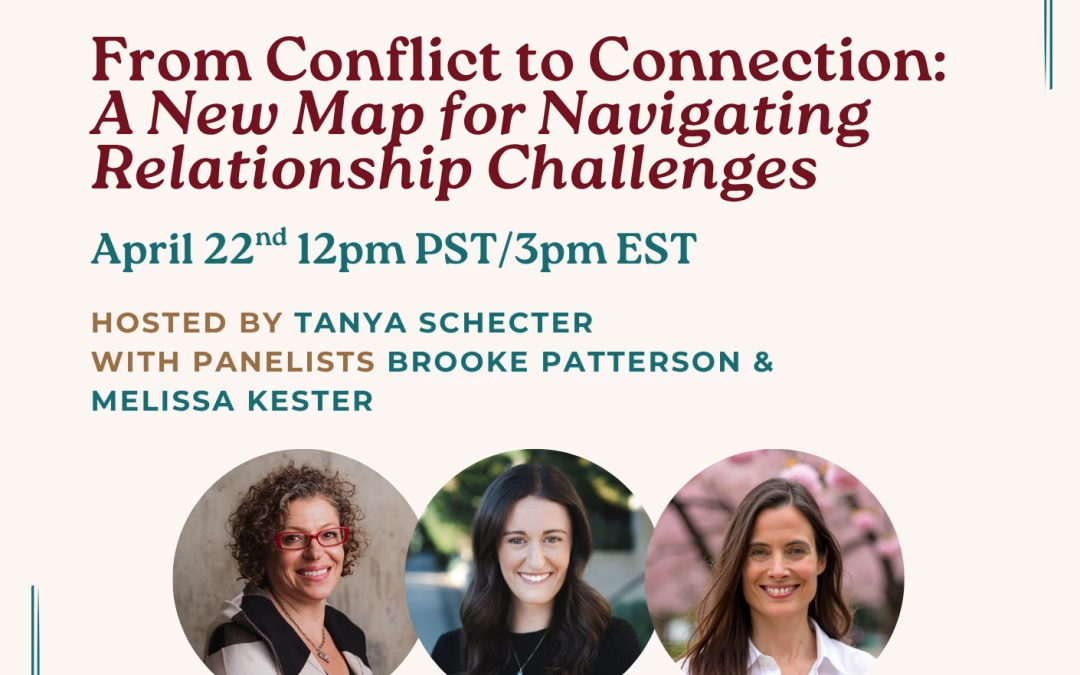
At Quoin Counselling, our therapists Tanya Schecter, Brooke Patterson, and Tiffany Wainwright are passionate about helping individuals and couples across Vancouver and British Columbia navigate conflict in a relational way. We’re committed to teaching you tools that will get you and your partner out of your destructive habits so that you can create a connected, intimate, and fulfilling relationship where conflict is easily navigated.
Ready to explore what’s possible?
If your relationship is asking for more — more honesty, more tools, more connection — we’d love to meet you. Book a free 15-minute consultation with us to learn about how we can support you!