How many times have you been in the middle of an argument with the person you love and found yourself rebutting what they’re trying to share with you with “the facts.” If you’re like most of us, it’s probably a lot.
Listening to our partner talk about something that feels unfair, untrue, or appears to assign an intention to us that we never had often causes us to lawyer up. We go into defense attorney mode, determined to prove how what they’re saying can’t possibly be true. Usually, this never resolves the issue – it just makes it worse, leaving everyone feeling unseen, unheard, unfairly treated, and disconnected.
Defensiveness in Relationships
Defensiveness often happens when you:
- Feel blamed or criticized
- Think you’re being misunderstood or mischaracterized
- Fear that listening equals taking the fall or admitting fault
Defensiveness is a natural survival reflex. It’s your nervous system saying, “Danger! I’m under attack!” and going into fight mode. But often, what your partner’s trying to tell you isn’t an attack — they’re just trying to express their experience.
The irony is that when you get defensive, you stop listening. And when you stop listening, you escalate the very conflict we’re trying to avoid.
How to Stop Being Defensive with Your Partner
In the heat of conflict, especially if you’re feeling attacked, truly listening to your partner is a game changer. Most of us, though, confuse listening (or saying nothing) with agreeing. This misunderstanding leads us straight into defensiveness. From there, our conversation typically turns into combat with the end result being that nobody feels heard and the real issue gets buried under ego protection.
Let’s clear the air: Listening is not agreement. Listening is just listening — it’s neither agreement nor disagreement. It is, however, respect. And it’s the foundation of emotional safety in any relationship.
Listening Isn’t the Same as Agreeing
Here’s the truth most of us were never taught: You can fully listen to someone’s pain, frustration, or perspective — even when you disagree with their interpretation.
Listening requires that you stay open long enough to understand what it’s like to be them, not arguing for what it’s like to be you.
Why Listening Works
Listening:
- Disarms conflict. Your partner is less likely to escalate when they feel truly heard.
- Builds trust. Even if you can’t reach agreement, hearing your partner out with an open heart validates the relationship.
- Reduces shame and reactivity. When listening is safe, truth becomes shareable.
Conflict Communication Strategies
Listening without defending involves:
- Breathing. Literally. Notice your body’s response when someone brings up a hard topic. Soften your shoulders. Get curious, not furious.
- Mirroring back what you hear. Use simple reflection: “So what I hear you saying is…” or “You’re feeling frustrated because…”
- Validating your partner’s experience — even if the facts differ from your recollection. You don’t have to agree with someone’s version of events to honor their feelings about it. Try: “I can see why that would feel hurtful to you.”
- Delaying your rebuttal. You’ll get your turn. First, stay in their world long enough that they feel you’re actually with them.
- Holding your boundary with respect. If something feels off, say: “I hear you. I want to come back to my perspective once we’ve made some space for yours.”
What Listening is Not
True listening doesn’t involve:
- Passively accepting blame.
- Rolling over.
- Abandoning your truth.
- Seeing it as a trap.
Listening is the strongest relational move you can make. It allows you to stay grounded while creating room for connection.
The Relational Payoff
When your partner feels truly listened to, they feel safer and are likely to soften. They start listening back. And the whole tone of your relationship shifts from adversarial to collaborative and connected.
This is how conflict transforms. Not by winning. Not by being right. But by being real, grounded, and willing to sit with someone’s experience long enough to let it change you — even just a little.
A Final Thought on Listening
If you want a better relationship, you have to unlearn the reflex to defend — and replace it with the courage to listen.
You can listen without agreeing. You can hear someone without surrendering. And when you do, you invite something rare and healing into the conversation: connection.
Ready to learn better listening skills?
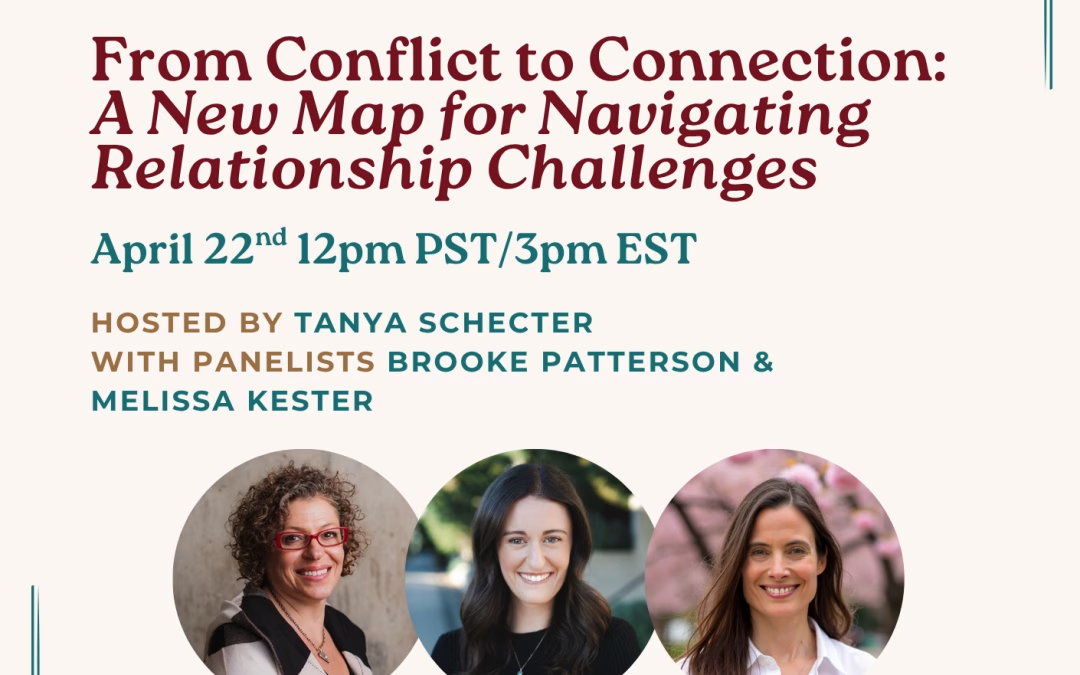
If you’re reading this and recognizing yourself, you’re not alone and you don’t have to stay stuck – you can learn better listening skills and improve your ability to navigate conflict in a more relational manner. At Quoin Counselling, our skilled therapists (Tanya Schecter, Brooke Patterson, and Tiffany Wainwright) work with individuals and couples across Vancouver and B.C. to build secure, steady connections. If your relationship is asking for more — more safety, more intimacy, more trust — we’d love to walk alongside you in that process.
Book a free 15-minute consultation with us to explore how we can help.