Conflict isn’t a sign your relationship is broken — it’s a sign you’re in one. Ed Tronick, the developmental psychologist who studied parent–child bonds, found that all good relationships move through a rhythm: connection, disconnection, and repair. The magic isn’t in avoiding conflict, it’s in how you come back from it. If you and your partner never fight, that’s actually more concerning — it usually means something important isn’t being spoken.
But here’s the catch: healthy conflict is rare. Most of us weren’t taught how to fight well. We were taught to lash out, shut down, or win at all costs. Healthy conflict is harder to come by. Healthy conflict involves not only staying in conflict long enough to engage in repair, but doing so in such a way that communication feels respectful and relational. To move toward repair, you first have to know what sabotages connection.
The Four Horsemen of the Apocalypse
John Gottman, a leading relationship researcher and psychologist, calls out four toxic patterns that predict relational breakdown. If you see these showing up in your fights, consider it a flashing warning light:
- Criticism: Attacking your partner’s character or personality instead of naming a specific behavior. It breeds shame and defensiveness, and pushes your partner away.
- Contempt: Eye-rolling, mocking, sarcasm, name-calling — all signals of superiority, disgust, and emotional rejection. This one is the number-one predictor of divorce.
- Defensiveness: Playing the victim, righteous indignation, making excuses, and refusing to take ownership. It escalates conflict, reduces the possibility of resolution, and entrenches the idea of you and your partner being on opposing sides instead of on the same team.
- Stonewalling: Shutting down, going silent, or walking away. It leaves your partner feeling abandoned and kills intimacy.
Losing Relational Strategies
Terry Real, founder of Relational Life Therapy (RLT), names another set of relationship killers — the “losing strategies.” They’re called this because even when you think you’re “winning,” you’re losing the relationship. They are:
- Control: Trying to get your partner to do what you want (directly or indirectly)— through micromanaging, manipulation, or passive-aggressive behaviour. This destroys partnership and cooperation, erodes trust, and breeds resentment and rebellion.
- Needing to Be Right: Trying to prove that you are right and your partner is wrong. This can look like debating, correcting, moral high-grounding, or fact-checking mid-argument.This behavior turns your relationship into a courtroom instead of a safe place. Even if you “win” the argument, you lose connection.
- Unbridled Self-Expression: Dumping every raw thought and feeling as if honesty alone is the goal. This can look like ranting, yelling, saying hurtful things in the name of truth, “just being real”, or continuing to talk even when your partner tells you that they are no longer capable of hearing what you are saying. This behavior often causes a secondary level of hurt that needs to be repaired.
- Retaliation: Trying to get even or punish your partner for hurting or disappointing you — whether through sarcasm, withdrawal, tit-for-tat behaviour, or punishment. It escalates conflict and keeps you in a loop of pain and payback.
- Withdrawal: Checking out emotionally or physically to avoid conflict. This can look like going silent, walking away, changing the subject, or becoming “too busy.” This behavior breeds insecurity and disconnection and leaves your partner insecure and alone in the relationship.
Winning Relational Strategies
Here’s the good news: you can train yourself into healthier patterns. These “winning strategies” strengthen your connection instead of breaking it:
- Work as a partnership – remember that your partner is someone you love, not your adversary, and that they want to want to work with you – not for you. This looks like making clear requests, not demands; staying open to “no,” and working toward a mutual “yes”; and using influence, not force. This behaviour honors your partner’s autonomy while allowing you to express your needs clearly.
- Prioritize your connection – ask yourself: “Do I want to be right, or do I want to be close?” It involves focusing on outcomes that work for both of you instead of proving a point which requires listening and validating your partner all while looking to find common ground — even if you disagree on the facts. This prioritizes your relationship over winning the argument and leads to harmony, satisfaction and connection.
- Be thoughtful in self-disclosure – reflect on the intent as well as the impact of what you want to say before you utter it. This looks like owning your feelings using “I” statements, pausing before speaking (i.e., asking if now is a good time), and sharing vulnerably, not explosively. This typically increases the likelihood that your partner will not only hear your concerns but respond appropriately to them.
- Hold your partner accountable without attacking them – call out hurtful behavior without mirroring it, calmly setting boundaries while inviting repair instead of revenge. This allows for the hurtful behavior to end without escalation and further damage to your relationship.
- Stay present and engaged – show up and stay in the room emotionally and relationally or, if you need space, taking it in a responsible manner. This looks like saying, “This is hard, but I’m here”; asking for a break if you need it — but committing to coming back; and leaning in with curiosity instead of shutting down. This one radical act typically allows for repair to unfold, trust to build, and for your relationship to deepen.
What’s the Core Mindset of Winning Strategies?
If nothing else, practicing the muscles attached to the following mindset will improve your relationship exponentially:
- Mutuality over power
- Accountability over blame
- Connection over ego
- Vulnerability over defense
Want to Learn to Use These Skills Masterfully?
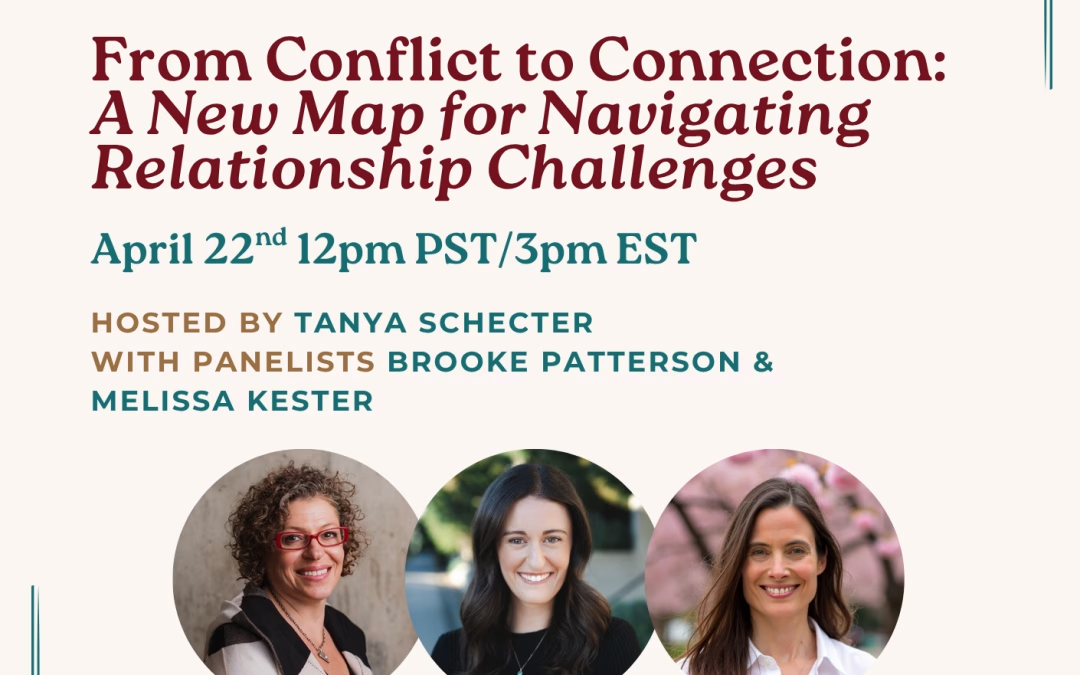
If you’d like support learning these skills, our counsellors at Quoin Counselling — Tanya Schecter, Brooke Patterson, and Tiffany Wainwright — are here to help. Book a free 15-minute consultation to explore how relationship therapy can help you build repair into your relationship.