There’s a moment I see again and again in my office.
One partner is leaning forward, voice tight, eyes searching. “Can we just talk about this now?” The other is already backing away, arms crossed, jaw clenched. “I need space. I can’t do this right now.” And just like that, their dance begins.
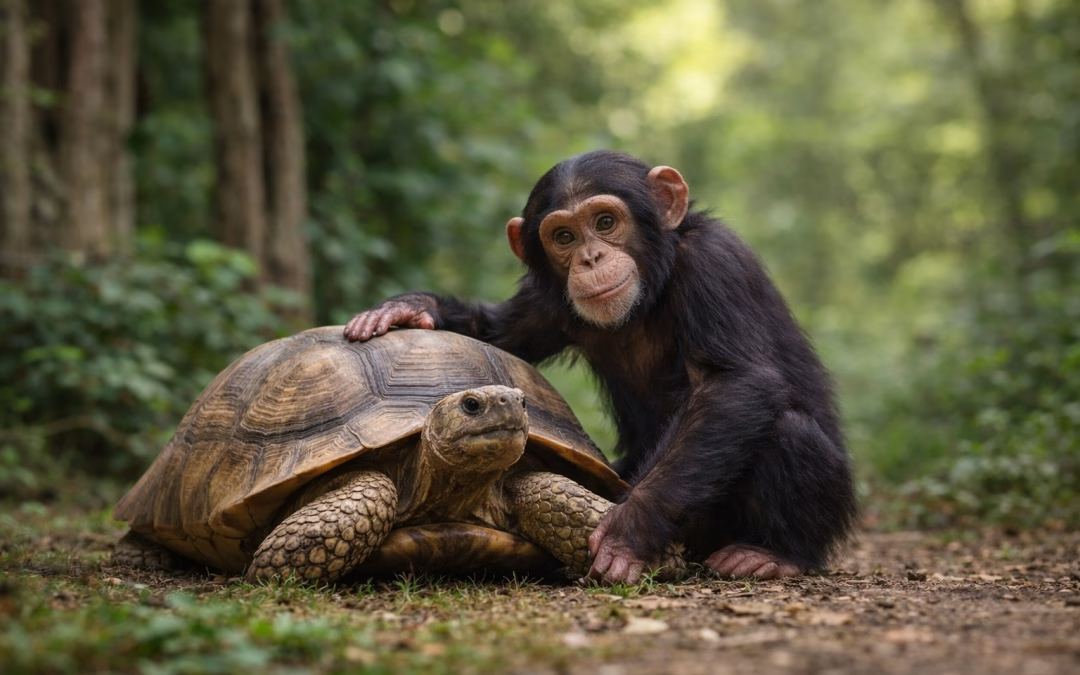
If you’ve ever felt like the harder you reach, the further your partner disappears, or the more you pull back, the louder your partner comes at you, you’re not broken. You’re not incompatible. You’re likely caught in what we call the pursuer–withdrawer dynamic. Or, as I often describe it: the chimp and the turtle.
The Chimp: Wired for Connection
A chimp wants closeness, reassurance, and repair. Now.
When something feels off, a chimp’s nervous system goes on high alert. Silence feels dangerous. Distance feels like rejection. So a chimp reaches, questions, explains, re-explains, and pushes for resolution.
Not because they want conflict, but because connection is how they feel safe.
From the outside, a chimp can be experienced as demanding, emotional, or relentless. Inside, they’re feeling anxious and thinking: If we don’t fix this, we’re drifting apart.
The Turtle: Wired for Safety Through Space
A turtle experiences that same moment very differently. When emotions rise, their nervous system floods. Words get tangled. Thoughts slow down. The safest option feels like retreating into quiet, into space, into their shell.
A turtle isn’t trying to punish or abandon. They’re trying to regulate.
From the outside, a turtle can look cold, dismissive, or checked out. Inside, they’re thinking: If I stay here in my shell, I’ll be safe.
Same Moment. Opposite Needs.
Here’s the hard truth most couples miss: Both partners are trying to protect their relationship. They’re just using opposite strategies.
A chimp moves toward connection in an attempt to calm their system. A turtle moves away from stimulation to try and calm their system.
The problem isn’t the need for space or the need for closeness. The problem is what happens when each person makes the other wrong for how they survive stress.
How this Dynamic Turns Toxic
Unchecked, this pattern escalates fast.
- The chimp pursues harder and the turtle withdraws more
- The turtle withdraws more and the chimp panics and escalates
- Both feel unseen, unsafe, and alone
Eventually, couples stop fighting about the original issue and start fighting the pattern itself. “Why won’t you talk to me?”
“Why can’t you just leave me alone?”
At this point, intimacy isn’t missing because of lack of love. It’s missing because their nervous systems are at war.
What Actually Breaks this Cycle
This isn’t about one of you changing personalities. It’s about learning to lead with awareness instead of reflex.
If you’re the chimp:
- Learn to pause pursuit before it becomes perceived as relentless
- Ask for connection without demanding immediate resolution
- Tolerate short-term distance without assuming abandonment
If you’re the turtle:
- Learn to name your need for space without disappearing
- Commit to returning within a specified period of time for a check in instead of retreating indefinitely
- Reassure your partner that you want to stay connected even though you want to take space
For your relationship:
- Build agreements around how space and reconnection happen (see our article on The Power of the Pause)
- Stop framing differences as character flaws
- Shift the conflict from “me vs you” to “us vs the pattern”
This is repair work. Real leadership work. And it’s learnable.
A Final Truth Most Couples Need to Hear
A turtle doesn’t need to become a chimp. A chimp doesn’t need to become a turtle. But both need to learn how to stay in relationship while regulating differently.
When couples stop pathologizing their differences and start understanding their nervous systems, something powerful happens: safety returns. And with safety comes closeness, without force.
Ready to Stop the Chase-and-Retreat Cycle?
If you recognize yourselves in this dynamic, don’t wait until resentment hardens or silence becomes permanent.
At Quoin Counselling, our therapists (Tanya Schecter, Brooke Patterson, Tiffany Wainwright and Irene Yakovleva) help couples slow their pattern down, understand what’s actually happening beneath it, and build new ways of reaching for each other, without overwhelm or shutdown.
You don’t need to choose between space and connection. You need a relationship that can hold both.
Take your first step and book your free consultation with Quoin Counselling and start changing your pattern, not each other.